Sustainable Beer Label Paper in 2026: How to Stay PPWR-Compliant Without Losing Your Metallic Shelf Impact

Published: April 2026 | 11 min read | Audience: Brand Sustainability Managers & CSR Packaging Compliance Teams
August 12, 2026 is not a distant deadline anymore. It is this quarter. And if your beer brand sells into the European Union — or plans to — the clock on PPWR compliance has already run out of snooze buttons.
Here is the problem nobody in the brewing industry talks about openly: sustainability teams and brand design teams are pulling in opposite directions. The sustainability director wants to eliminate metallic packaging components. The brand manager insists the silver label is non-negotiable for shelf recognition. Meanwhile, the packaging procurement team is stuck in the middle, fielding pressure from both sides and receiving very little useful guidance from suppliers.
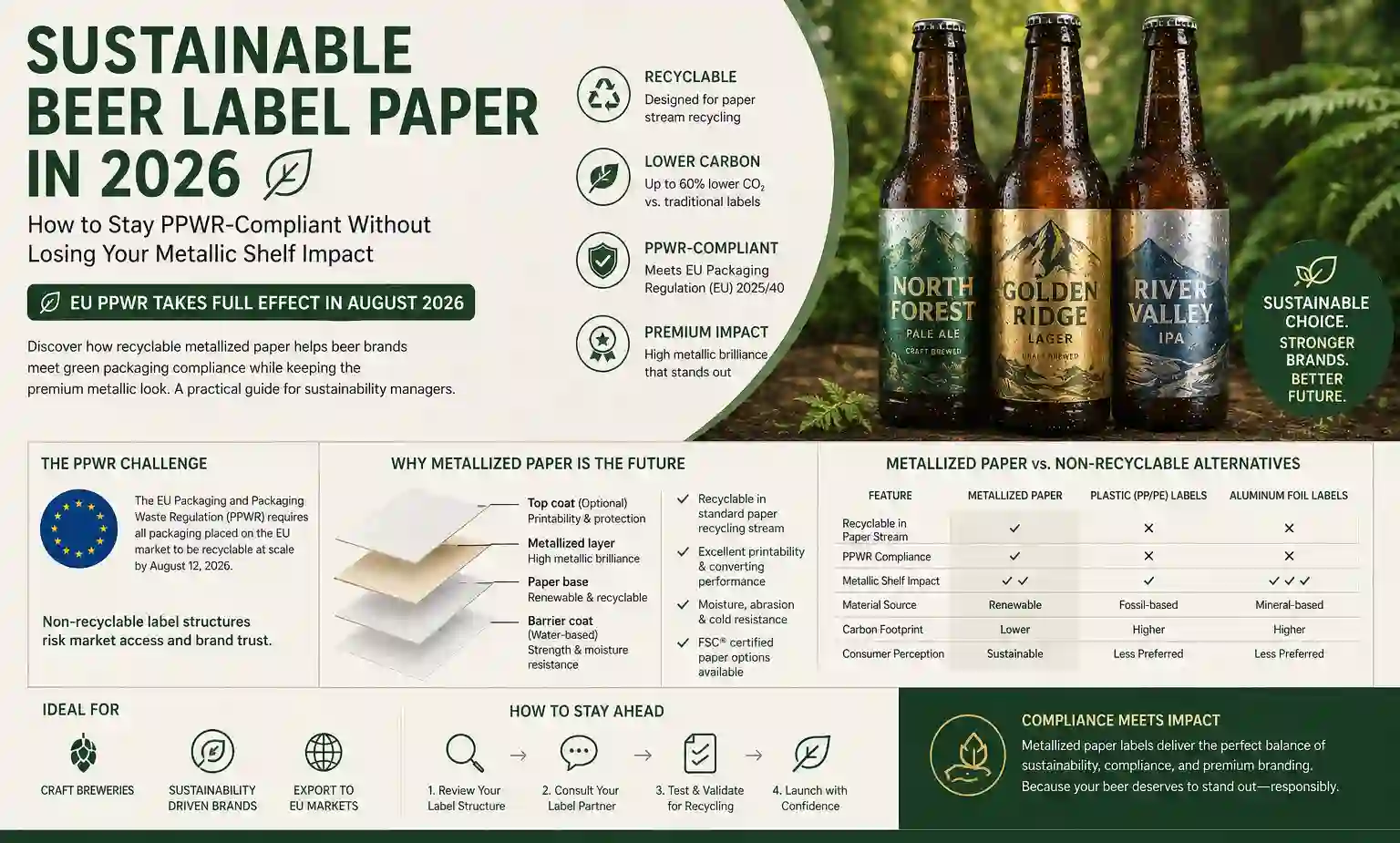
This article cuts through that tension. Because the truth — backed by material science and the actual text of EU Regulation 2025/40 (PPWR) — is that you do not have to choose between a compliant label and a beautiful one. Paper-based metallized beer labels, when correctly specified, can satisfy both requirements simultaneously. Here is exactly how.
📑 Compliance & Sustainability Guide — Contents
1. What PPWR Actually Requires from Beer Label Packaging in 2026
Let's start with the regulation itself, because a lot of what circulates in packaging forums is either outdated or exaggerated. EU Regulation 2025/40 — the Packaging and Packaging Waste Regulation (PPWR) — entered into force on February 11, 2025. Most of its core provisions became binding across all EU Member States on August 12, 2026, with no flexibility for individual countries to delay implementation at a national level.
For beer labels specifically, the regulation creates three immediate pressure points:
Pressure Point 1: Recyclability by Design
The PPWR introduces a formal recyclability grading system — from Grade A (≥95% recyclable) down to Grade E. From January 2030 onward, only packaging graded A, B, or C (≥70% recyclable) may be sold on the EU market. From 2038, only A and B grades will be permitted. This is not a voluntary target. It is a legal threshold with a hard ban attached.
For beer brands, this means every substrate in the label construction — face material, adhesive, liner — will be evaluated as part of the total recyclability score. Labels that disrupt glass or paper recycling streams will face market access restrictions.
Pressure Point 2: EPR Fee Modulation
Extended Producer Responsibility (EPR) schemes across the EU are now explicitly required to modulate fees based on eco-design and recyclability performance. In plain terms: brands using harder-to-recycle label materials pay higher EPR fees. Brands using design-for-recycling substrates pay less. The financial incentive to switch to recyclable label materials is now directly built into the compliance cost structure.
Pressure Point 3: Supply Chain Documentation Requirements
Under the PPWR, brands must maintain and provide technical documentation proving packaging compliance. Importantly, suppliers are legally required to pass all necessary compliance documentation along the supply chain. This means your label substrate supplier must be able to provide conformity documentation — not just a verbal assurance of recyclability.
2. The BOPP Plastic Label Problem: Why the Status Quo Is Now a Liability
BOPP (Biaxially Oriented Polypropylene) metallized film labels have been the industry default for beer labels that need moisture resistance, dimensional stability, and metallic appearance. They perform well technically. The sustainability problem they create is significant and getting more expensive.
Here is the core issue: BOPP is a plastic substrate. When a BOPP label is applied to a glass beer bottle that enters a glass recycling stream, it creates contamination. The plastic film does not melt at glass recycling furnace temperatures, and it does not detach cleanly in the bottle washing process used for returnable glass. This means:
Glass recyclers penalize or reject loads with high plastic label contamination.
BOPP labels in paper recycling streams are equally problematic — the plastic film disrupts the paper fiber separation process.
Under PPWR's EPR fee modulation framework, using plastic film labels on glass beverage containers is likely to attract higher producer responsibility fees.
BOPP metallized film will almost certainly fall into recyclability Grade D or E under the formal assessment criteria being finalized by the EU Commission — meaning a market access prohibition from 2030 onward unless the formulation changes significantly.
3. Why Paper-Based Metallized Labels Have the Recyclability Edge
This is where the conversation shifts from problem to solution — and where sustainable beer label paper earns its place as the most rational strategic choice for brands navigating the 2026-2030 compliance landscape.
The Fiber-Dominant Structure Argument
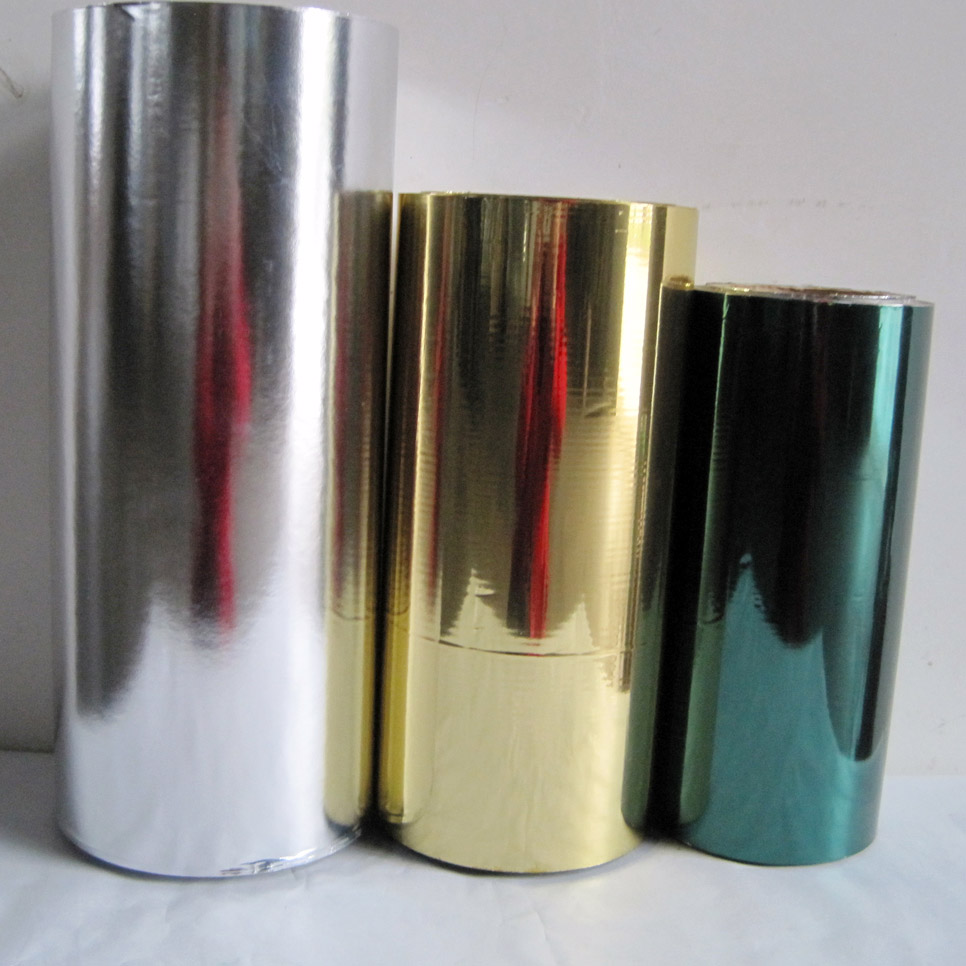
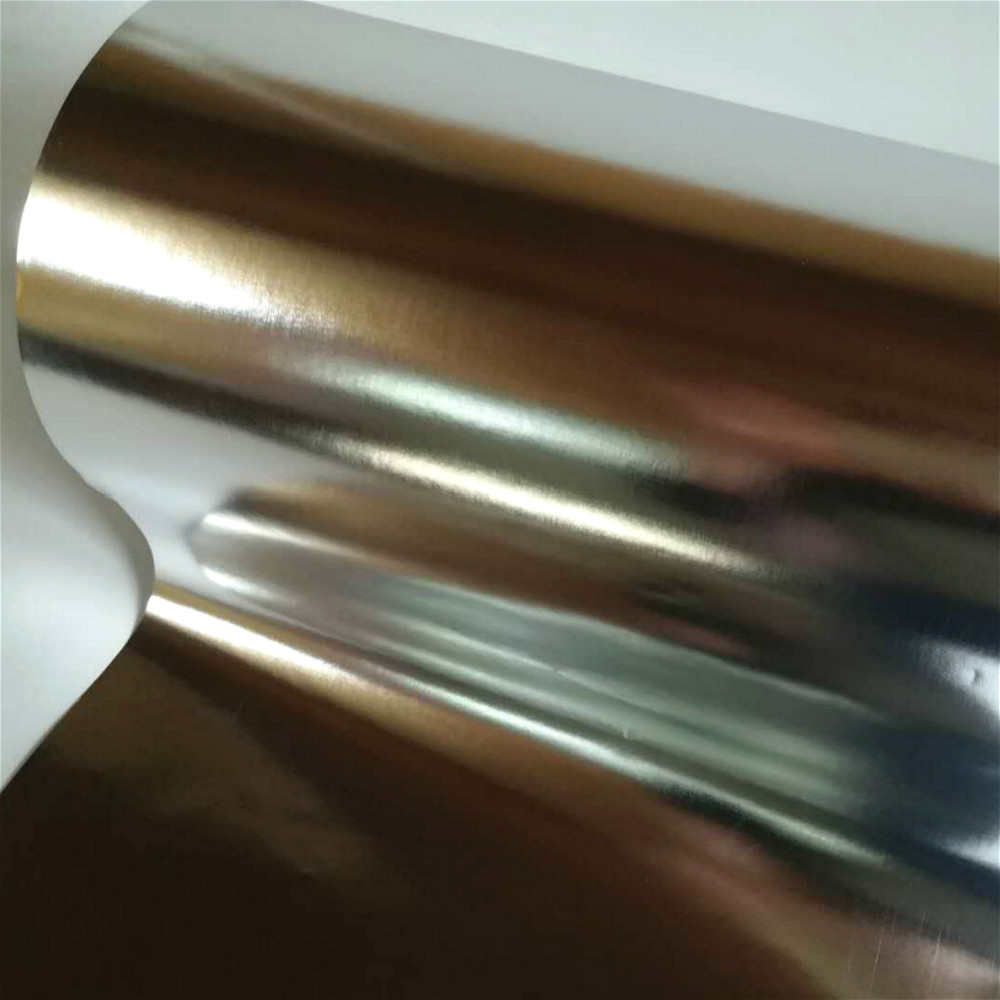
Premium vacuum metallized paper — the type produced at Huafu Pack's Xianning facility — consists of a paper base with an aluminum coating that is only 25 to 40 nanometers thin. The total aluminum content by weight is negligible. The overwhelming dominant material is cellulose fiber. This matters enormously for recycling system compatibility.
In the glass bottle washing process used by breweries running returnable bottle programs, metallized paper labels treated with the right adhesive system detach from the bottle surface in the hot caustic wash and exit the process as intact paper sheets. They do not disintegrate into pulp that clogs washing filters the way standard uncoated paper does. They do not contaminate the glass melt the way plastic film does.
The Paper Recycling System Compatibility
When a metallized paper label from a non-returnable bottle reaches the paper recycling system, the ultra-thin aluminum layer presents only a minimal deinking and separation challenge. Paper mills that process mixed paper streams are far better equipped to handle nanometer-scale metallic coatings than they are to handle thick BOPP film layers. The fiber content is recoverable. The aluminum content, while not cleanly separated, does not prevent the paper fiber from being recycled.
The Brand Equity Argument: You Keep the Metallic Look
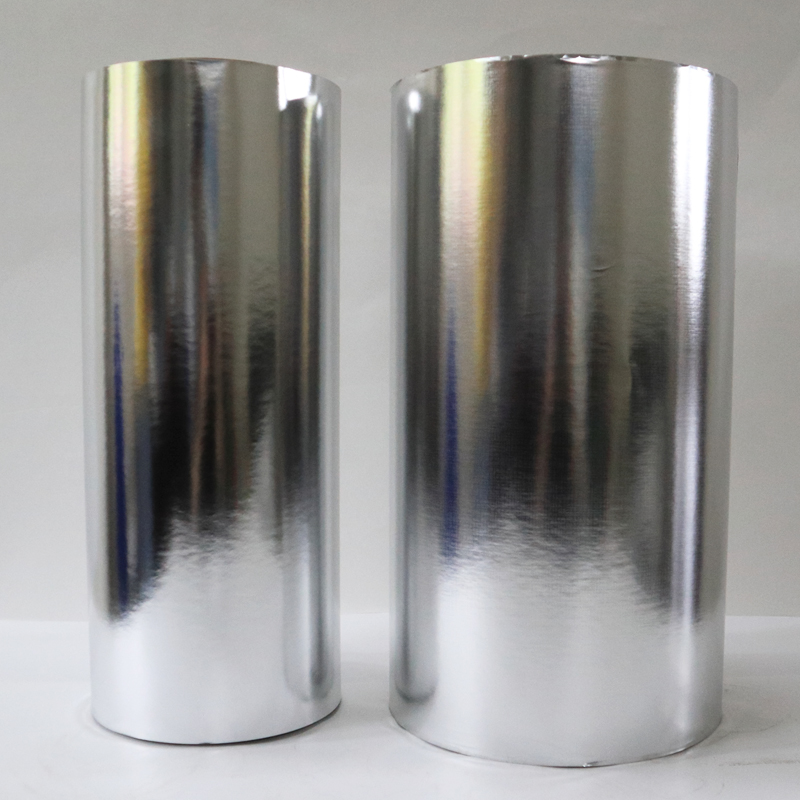
This is the point where sustainability directors and brand managers can finally stop arguing. Vacuum metallized paper at OD values of 2.8 and above delivers a mirror-bright silver surface visually indistinguishable from BOPP metallized film on the shelf. The gloss, the light reflection, the premium signal — all preserved. The sustainability compliance gain comes without a single pixel of visual compromise.
| Compliance & Sustainability Factor | BOPP Metallized Film Label | Vacuum Metallized Paper Label (Huafu Pack) |
|---|---|---|
| Primary Material Category | Plastic (Polypropylene film) | Paper-based (Cellulose fiber dominant) |
| Glass Recycling Compatibility | Poor (plastic contamination) | Good (fiber-dominant, detaches in caustic wash) |
| Paper Recycling Compatibility | Disrupts fiber separation | Compatible (nano-aluminum layer is minimal) |
| Estimated PPWR Recyclability Grade (Post-2030) | Likely Grade D or E (market access risk) | Targeting Grade B or C (market access safe) |
| EPR Fee Impact | Higher fees (plastic on glass = poor eco-design) | Lower fees (paper-based = favourable eco-design) |
| Visual Metallic Effect on Shelf | Mirror-bright silver ✓ | Mirror-bright silver ✓ (OD ≥ 2.8) |
| Supplier Documentation for PPWR Compliance | Varies by supplier, often incomplete | COA + technical data sheet available per batch |
📖 Technical deep-dive on wash-off performance: Why Wet Strength Metallized Paper Is Crucial for Beer Labels in 2026
4. Surviving Your EPR Audit: What Documentation You Actually Need
For sustainability managers preparing for EPR compliance audits, knowing what a label substrate supplier is legally required to provide under the PPWR framework is half the battle. Here is a practical breakdown.
What Your Label Material Supplier Must Provide
Under the PPWR, suppliers passing materials along the chain must supply manufacturers with all necessary information and documentation to demonstrate compliance. For your metallized beer label paper supplier, this means you should be able to request and receive:
Material Composition Declaration: Full disclosure of base paper grammage, aluminum layer thickness (nm), top coating chemical composition, and any adhesive or functional coatings. Huafu Pack provides this as a standard product technical data sheet per SKU.
Certificate of Analysis (COA) per Production Batch: Confirming OD value, Cobb value (moisture resistance), surface tension (dyne level), and tensile strength. This is the document your quality team needs to demonstrate consistent compliance, not just a one-time certification.
Recyclability Supporting Data: Evidence that the material is compatible with glass or paper recycling streams. Ask for wash-off test data performed to Glass Packaging Institute (GPI) or equivalent industry standards.
PFAS Compliance Statement: From August 2026, PFAS concentrations in food-contact packaging cannot exceed the PPWR thresholds. While beer labels are not direct food-contact materials, any functional coatings applied to the label surface must be PFAS-free or PFAS-within-limit — and your supplier must be able to confirm this in writing.
5. The 2026 Green Beer Label Compliance Checklist
Use this checklist as a practical starting point for your packaging sustainability review. It is not a legal instrument, but it maps directly to the PPWR framework and the EPR audit questions that sustainability compliance teams face in practice.
| # | Compliance Checkpoint | What to Look For |
|---|---|---|
| 01 | Is your current label substrate paper-based or plastic-based? | Paper-based = favourable. Plastic film (BOPP/PET) = requires urgent review. |
| 02 | Has recyclability been verified by independent test data (not supplier claims)? | Ask for GPI wash-off test results or equivalent third-party recyclability data. |
| 03 | Does your supplier provide a per-batch COA confirming key performance metrics? | OD value, Cobb value, surface tension. One certificate per production batch — not one per year. |
| 04 | Is your supplier able to provide a PFAS compliance statement? | Written confirmation that all functional coatings are within PPWR PFAS thresholds. |
| 05 | Is your EPR registration current and correctly categorized in each EU market you sell into? | National EPR registers (e.g., LUCID in Germany) require active registration. Penalties apply. |
| 06 | Are you preparing for the 2027 digital labelling requirement (QR code on packaging)? | Digital identifiers linking to material composition and recyclability data will be mandatory from 2027. |
📖 Considering switching to a factory-direct supplier that provides compliance documentation? China Metallized Paper Manufacturer: Factory Direct Supply for Beer Labels
6. FAQ: PPWR & Sustainable Label Materials Explained
A: No. The PPWR does not name or ban specific label formats. It creates a recyclability grading system that will progressively restrict packaging scoring below Grade C (less than 70% recyclable) from 2030 onward. The critical variable is the substrate material, not the metallic appearance. Paper-based metallized labels are well-positioned to meet Grade B or C thresholds. Plastic film metallized labels face significantly higher risk of falling into Grade D or E.
A: EPR (Extended Producer Responsibility) fee modulation means that the fees you pay into national recycling systems are adjusted based on how recyclable your packaging is. Brands using materials that are harder to recycle pay higher rates. Brands using eco-designed, recyclable substrates pay lower rates. The exact fee structures vary by EU Member State and are still being finalized for the post-2026 PPWR framework, but the directional principle is clear: non-recyclable label materials will carry a measurable financial cost premium over paper-based alternatives.
A: In most cases, no. Premium vacuum metallized paper runs on standard UV flexo and offset presses without equipment modification. The surface tension of the top coating (≥38 dyne/cm) is designed to accept the same ink systems used on BOPP metallized film. Your label converter should request a free A4 sample from Huafu Pack to run a press adhesion trial before committing to production volumes.
A: For now, PPWR compliance is only required for packaging placed on the EU market. Packaging for products exported exclusively outside the EU may be exempt from labelling and registration requirements, provided this is properly documented. However, sustainability packaging legislation is tightening globally — the UK, Canada, and several APAC markets are advancing their own EPR frameworks. Switching to recyclable paper-based label materials now is a future-proof decision regardless of your primary export market.
Keep the Metallic Look. Meet the PPWR Deadline.
Talk to our export team directly about PPWR-compatible metallized paper specifications, per-batch COA documentation, and free substrate samples for your compliance testing program. No commitment required to start.
📍 Xianning High-Tech Zone, Hubei Province, China | ✉️ sales@huafupacking.net | 📞 +86-13797805927
Mr. Xiao works at the intersection of materials manufacturing and regulatory compliance at Huafu Packing Material Co.,Ltd, Xianning. Over the past decade, he has guided brewery brands and packaging procurement teams across Europe and North America through substrate transitions driven by sustainability mandates — from early EPR programme rollouts to the current PPWR implementation cycle. He keeps the technical details accurate and the advice usable for non-specialists.
Regulatory References & Industry Standards
EU Regulation 2025/40 — Packaging and Packaging Waste Regulation (PPWR). Official Journal of the European Union, published 22 January 2025. Entered into force 11 February 2025. Core provisions applicable from 12 August 2026.
European Commission Guidance Document on PPWR Implementation, published 30 March 2026 — addressing EPR, single-use packaging and recyclability obligations for stakeholders.
PPWR Recyclability Grading Framework (Annex II): Grade A ≥95%, Grade B ≥80%, Grade C ≥70%. Hard market-access ban on Grade D and E packaging from 1 January 2030.
Glass Packaging Institute (GPI) — Recommended Label Wash-Off Guidelines for Returnable Glass Bottle Programmes, 2024 Edition.
FINAT Technical Handbook (9th Edition) — Recyclability and sustainability assessment criteria for self-adhesive label materials, Section 7.
Huafu Packing Material Co.,Ltd — Product Technical Data Sheets & Batch COA Records, Xianning Facility, 2011–2026.